1.4 - Section 608 and Section 609
Regulatory verification date: August 5, 2026
Primary authority: Clean Air Act Sections 608 and 609; 40 CFR Part 82, Subparts B and F
Course role: Distinguishes stationary-appliance certification from motor-vehicle air-conditioning certification and explains the areas in which the two programs overlap
Learning Objectives
After completing this section, a student should be able to:
- Explain the primary scope of Clean Air Act Sections 608 and 609.
- Distinguish a stationary refrigeration or air-conditioning appliance from a motor-vehicle air conditioner.
- State when Section 609 technician certification is required.
- Explain why Section 608 Universal certification does not replace Section 609 certification for paid MVAC service.
- Define an MVAC-like appliance and identify representative examples.
- Explain the two permitted certification pathways for servicing an MVAC-like appliance.
- Classify refrigerated-cargo systems and selected bus air-conditioning systems correctly.
- Compare the technician-training and examination requirements under Sections 608 and 609.
- Compare refrigerant-purchase authority under Section 608 and Section 609 certification.
- Apply the correct certification program to representative stationary, on-road, off-road, cargo-cooling, and disposal scenarios.
Introduction
Sections 608 and 609 are both parts of Title VI of the Clean Air Act, and both address refrigerant handling. However, they do not cover the same equipment or use the same certification process.
At the most basic level:
- Section 608 primarily addresses stationary refrigeration and air-conditioning appliances.
- Section 609 specifically addresses the servicing of motor-vehicle air conditioners.
The distinction is important because a technician may be highly qualified in stationary HVAC systems but still lack the certification required to service a vehicle air-conditioning system for payment or barter.
The two programs also overlap. For example:
- Section 608 contains the refrigerant sales restriction that applies to both Section 608 and Section 609 technicians.
- Section 608 prohibits intentional venting during service and disposal, including work involving MVAC systems.
- MVAC-like appliances may be serviced under either Section 608 Type II or Section 609 certification.
- Disposal of MVAC systems involves Section 608 safe-disposal requirements even though MVAC service is governed primarily by Section 609.
This section develops a structured method for determining which certification program applies.
Key Concepts
1. Primary Scope of Section 608
Section 608 regulations are found primarily in:
40 CFR Part 82, Subpart F
They address refrigerant management associated with stationary refrigeration and air-conditioning equipment.
Representative Section 608 appliances include:
- Household refrigerators and freezers.
- Window and room air conditioners.
- Residential split-system air conditioners.
- Residential and commercial heat pumps.
- Packaged rooftop units.
- Commercial refrigeration systems.
- Supermarket refrigeration equipment.
- Walk-in coolers and freezers.
- Industrial-process refrigeration systems.
- Low-pressure chillers.
- Refrigerated-cargo systems that are excluded from the MVAC definition.
Section 608 certification is divided into:
- Type I.
- Type II.
- Type III.
- Universal.
Detailed certification categories were developed in Section 1.3 - Certification Types.
2. Primary Scope of Section 609
Section 609 regulations are found primarily in:
40 CFR Part 82, Subpart B
They specifically address the servicing of motor-vehicle air conditioners, commonly abbreviated as MVACs.
A motor-vehicle air conditioner is mechanical vapor-compression refrigeration equipment used to cool the driver’s or passenger’s compartment of a motor vehicle.
Representative MVAC systems include air-conditioning systems in:
- Passenger cars.
- Pickup trucks.
- Highway vans.
- On-road trucks.
- Other motor vehicles when the system satisfies the MVAC definition.
Section 609 certification is required when a person repairs or services an MVAC for consideration.
For consideration includes:
- Direct monetary payment.
- Bartering.
- Another form of compensation.
The certification requirement applies regardless of the refrigerant used in the MVAC.
3. Section 608 Universal Does Not Replace Section 609
A Universal Section 608 technician has passed:
- Core.
- Type I.
- Type II.
- Type III.
Universal certification covers the stationary-appliance categories included in Section 608. It does not automatically authorize a technician to repair or service an MVAC for consideration.
A technician performing paid or bartered MVAC service must be trained and certified through an EPA-approved Section 609 technician training and certification program.
The two credentials have different purposes.
| Credential | Primary Scope |
|---|---|
| Section 608 Universal | Stationary appliance categories covered by Types I, II, and III |
| Section 609 | Motor-vehicle air-conditioning service for consideration |
A technician who works on both stationary HVAC systems and vehicle air-conditioning systems may need both certifications.
4. The Section 609 Certification Process Is Different
The two programs use different certification structures.
Section 608
Under Section 608:
- Training and review courses are voluntary.
- Passing an EPA-approved examination is mandatory.
- The examination is organized around Core and the appliance-specific types.
- Universal certification requires the required sections under secure, proctored conditions.
Section 609
Under Section 609:
- Training through an EPA-approved program is required.
- The technician must pass a test.
- Training includes proper use of MVAC service equipment.
- The program addresses applicable Section 609 regulations.
- The program covers recovery and recycling practices.
- The program addresses the ozone and climate effects of improper refrigerant handling.
The Section 608 and Section 609 tests are different. Passing one does not automatically count as passing the other.
5. Approved Equipment Requirements Are Program-Specific
Both programs require suitable refrigerant-handling equipment, but the equipment standards and intended applications differ.
Section 609 programs emphasize MVAC service equipment designed and certified for applicable Society of Automotive Engineers standards.
Depending on the equipment and task, Section 609 service equipment may be designed to:
- Recover refrigerant.
- Recover and recycle refrigerant.
- Recover, recycle, and recharge refrigerant.
MVAC systems also use refrigerant-specific fittings to help prevent accidental mixing of refrigerants. EPA states that adapters should not be used to defeat the required unique-fitting system.
Section 608 stationary-equipment recovery and evacuation requirements are developed in Module 5.
6. Refrigerant Handling Under Section 609
For MVAC service:
- Certified equipment must be used before service that can reasonably release refrigerant.
- Recovered refrigerant must be recycled or reclaimed before it is recharged into an MVAC.
- This requirement applies even if the refrigerant is returned to the same vehicle.
- Recycled MVAC refrigerant may be reused in another MVAC when the applicable Section 609 requirements are satisfied.
- Off-site refrigerant sent for purification must be sent to an EPA-certified reclaimer.
This differs from the Section 608 definition and use of recycled refrigerant for stationary appliances. The distinction between recovery, recycling, and reclamation is developed in Module 5.
7. Intentional Venting Is Prohibited in Both Areas
Section 608 prohibits intentional venting during the maintenance, service, repair, or disposal of refrigeration and air-conditioning equipment, including MVAC systems.
Therefore:
- Section 609 service is not permission to vent.
- A do-it-yourself MVAC activity is not permission to vent.
- An uncertified person performing unpaid work is not automatically allowed to release refrigerant.
- A vehicle entering the waste stream must have refrigerant properly removed or verified as removed.
EPA identifies carbon dioxide, R-744, as exempt from the Section 608 venting prohibition, but it remains subject to Section 609 requirements when used in an MVAC.
8. MVAC-Like Appliances
An MVAC-like appliance is not the same as an ordinary on-road MVAC.
Under the current Section 608 definition, an MVAC-like appliance is:
- A mechanical vapor-compression appliance.
- An open-drive compressor appliance.
- Charged with 20 pounds or less of refrigerant.
- Used to cool the driver’s or passenger’s compartment.
- Installed on off-road vehicles or equipment.
Examples include air-conditioning systems on:
- Agricultural tractors.
- Combines.
- Construction equipment.
- Mining equipment.
- Other non-road vehicles or equipment meeting the definition.
The definition does not cover appliances using R-22.
9. Certification Options for MVAC-Like Appliances
A technician servicing an MVAC-like appliance must hold either:
- Section 608 Type II certification, or
- Section 609 technician certification.
This alternative pathway is specific to MVAC-like equipment.
EPA recommends that technicians servicing MVAC-like appliances consider Section 609 certification because the equipment and servicing practices are similar to MVAC systems.
Unlike the Section 609 requirement for ordinary MVAC service, the MVAC-like equipment requirements apply regardless of whether the person is compensated.
10. Refrigerated-Cargo Systems Are Not MVACs
The MVAC definition does not include hermetically sealed refrigeration systems used on motor vehicles for refrigerated cargo.
Examples include systems used to cool:
- Refrigerated truck cargo boxes.
- Refrigerated trailers.
- Food-transport compartments.
- Temperature-controlled cargo spaces.
These systems cool cargo rather than the driver’s or passenger’s compartment.
They are generally evaluated under Section 608 according to their appliance and pressure classification.
A common examination error is to assume that every refrigeration system mounted on a vehicle is an MVAC. The intended cooling function matters.
| Vehicle-Mounted System | Primary Cooling Purpose | General Certification Path |
|---|---|---|
| Passenger-car air conditioner | Driver and passenger compartment | Section 609 for service for consideration |
| Agricultural tractor cab air conditioner meeting the MVAC-like definition | Driver compartment of off-road equipment | Section 608 Type II or Section 609 |
| Refrigerated-truck cargo system | Cargo compartment | Section 608 |
| Refrigerated trailer system | Cargo compartment | Section 608 |
11. Bus Air-Conditioning Systems Require Careful Classification
EPA provides a specific examination-relevant distinction:
- A bus using R-12 air conditioning is treated as an MVAC.
- A bus using R-22 air conditioning is not treated as an MVAC or MVAC-like appliance; it is high-pressure equipment covered by Section 608 Type II.
This means that the word bus alone does not determine the certification program.
Students should check:
- The refrigerant.
- The system design.
- The current regulatory definition.
- Whether the system is classified as an MVAC, MVAC-like appliance, or Section 608 appliance.
Do not generalize the R-12 and R-22 examples to every modern bus system without checking current equipment and regulatory information.
12. Compensation Matters Differently Under the Two Programs
For ordinary MVAC service, Section 609 certification is triggered when repair or service is performed for consideration.
For Section 608 stationary-appliance work, the technician definition does not depend on payment. The determining factor is whether the activity could reasonably violate the refrigerant circuit and release refrigerant.
For MVAC-like appliances, EPA states that the applicable equipment and technician-certification requirements apply regardless of compensation.
| Work Situation | Does Payment Control the Certification Requirement? |
|---|---|
| Stationary Section 608 appliance service | No; the covered activity controls |
| MVAC service | Section 609 specifically applies to service for consideration |
| MVAC-like appliance service | No; certification requirements apply regardless of compensation |
| Venting prohibition | Payment does not create permission to vent |
13. Disposal Creates an Area of Overlap
MVAC service and repair are addressed primarily under Section 609, but disposal is an area where Section 608 applies.
When an MVAC enters the waste stream:
- The final person in the disposal chain must remove the refrigerant, or
- The final disposer must ensure that refrigerant was previously removed.
Section 608 technician certification is not required solely for disposal of an MVAC, MVAC-like appliance, or small appliance. However, the refrigerant-recovery and safe-disposal requirements remain.
This distinction was introduced in Section 1.2 and will be developed further in Module 6.
14. Refrigerant Sales Restrictions Overlap
The refrigerant sales restriction is established under Section 608, but both Section 608 and Section 609 certifications can provide refrigerant-purchase authority within their applicable scopes.
EPA’s current refrigerant-sales guidance states:
- Section 608 certified technicians can generally purchase ozone-depleting and non-exempt substitute refrigerants under the sales restriction.
- Section 609 certified technicians may purchase refrigerants acceptable for use in MVACs.
- Section 609 certification alone does not authorize purchase of refrigerant intended for stationary refrigeration and air-conditioning equipment.
- Section 609 technicians cannot use that credential to purchase stationary-equipment refrigerants such as R-22.
- Employers or authorized representatives may purchase when they provide the required evidence that they employ an appropriately certified technician.
A limited exception allows uncertified persons to purchase small cans of non-exempt substitute refrigerant for do-it-yourself MVAC use when the containers:
- Are designed to hold 2 pounds or less.
- Have unique fittings.
- Have self-sealing valves.
The sales exception does not authorize intentional venting or commercial MVAC service.
15. Section 609 Shop Responsibilities
A shop servicing MVAC systems has responsibilities beyond individual technician certification.
Current EPA requirements include:
- Acquisition and proper use of approved refrigerant-handling equipment.
- One-time equipment certification to the applicable EPA Regional Office when required.
- On-site records showing that persons using the equipment are properly trained and Section 609 certified.
- Records identifying facilities that receive recovered refrigerant.
- Retention of applicable records for 3 years.
- Proper use of refrigerant-specific fittings.
- Compliance with venting, recycling, reclamation, and safe-disposal requirements.
Detailed shop compliance is beyond the central purpose of the Section 608 Universal examination, but these requirements help distinguish Section 609 from Section 608 certification.
Technical and Regulatory Details
1. Section 608 and Section 609 Comparison
| Topic | Section 608 | Section 609 |
|---|---|---|
| Primary equipment | Stationary refrigeration and air-conditioning appliances | Motor-vehicle air conditioners |
| Main regulation | 40 CFR Part 82, Subpart F | 40 CFR Part 82, Subpart B |
| Certification structure | Core, Type I, Type II, Type III, Universal | MVAC technician training and certification |
| Training before test | Voluntary | Required through an EPA-approved program |
| Examination | EPA-approved Section 608 test | EPA-approved Section 609 program test |
| Compensation qualifier | Covered activity controls; payment is not required | Service or repair of an MVAC for consideration |
| Equipment standards | Section 608 recovery and recycling equipment standards | MVAC equipment certified to applicable Section 609 and SAE requirements |
| MVAC-like appliance | Type II pathway available | Section 609 pathway available |
| Refrigerated cargo | Generally Section 608 | Not an MVAC |
| Disposal | Section 608 safe-disposal rules apply | MVAC service program does not replace Section 608 disposal duties |
| Venting | Section 608 prohibition applies | Section 608 venting prohibition also applies to MVACs |
| Refrigerant purchase | Broad stationary-refrigerant authority under current sales rules | Refrigerants acceptable for MVAC use; no stationary-equipment authority |
2. Equipment Classification Decision Process
Use the following sequence.
Step 1 — Identify What Is Being Cooled
Ask whether the system cools:
- A driver’s or passenger’s compartment.
- A cargo compartment.
- A stationary occupied space.
- A process or product.
Step 2 — Identify Whether the Vehicle Is On-Road or Off-Road
Determine whether the air-conditioning system is installed in:
- A motor vehicle.
- Agricultural equipment.
- Construction equipment.
- Mining equipment.
- Other non-road equipment.
- A stationary appliance.
Step 3 — Check the Mechanical Definition
For MVAC-like equipment, check whether the appliance is:
- Mechanical vapor compression.
- Open drive.
- 20 pounds or less.
- Used to cool the operator or passenger compartment.
- Not an R-22 appliance.
Step 4 — Determine Whether Compensation Is Involved
For ordinary MVAC service, determine whether payment, barter, or another form of consideration is involved.
Step 5 — Select the Correct Certification Path
- Stationary appliance → Section 608.
- MVAC serviced for consideration → Section 609.
- MVAC-like appliance → Section 608 Type II or Section 609.
- Refrigerated-cargo system → Section 608.
- Bus R-12 example → Section 609/MVAC.
- Bus R-22 example → Section 608 Type II.
3. Scenario Analysis
| Scenario | Correct Certification Path | Explanation |
|---|---|---|
| Service a residential split-system air conditioner | Section 608 Type II or Universal | Stationary high-pressure appliance |
| Service a low-pressure centrifugal chiller | Section 608 Type III or Universal | Stationary low-pressure appliance |
| Repair a passenger-car air conditioner for payment | Section 609 | MVAC service for consideration |
| Repair an MVAC in exchange for another service | Section 609 | Barter is consideration |
| Service an agricultural tractor cab air conditioner meeting the MVAC-like definition | Section 608 Type II or Section 609 | Either pathway is permitted |
| Service a refrigerated-truck cargo unit | Section 608 | Cargo refrigeration is excluded from the MVAC definition |
| Service an R-22 bus air-conditioning system | Section 608 Type II | EPA identifies it as high-pressure Section 608 equipment |
| Service an R-12 bus air-conditioning system | Section 609 | EPA identifies it as an MVAC |
| Dispose of an MVAC | No Section 608 technician certification required solely for disposal | Recovery and safe-disposal requirements remain |
| Buy refrigerant intended for stationary HVAC equipment using only Section 609 certification | Not authorized | Section 609 certification is limited to refrigerant acceptable for MVAC use |
| Buy an eligible 2-pound-or-less self-sealing MVAC can for personal DIY use | Certification exception may apply | Sales exception does not authorize paid service or venting |
| Hold Section 608 Universal certification and perform paid automotive A/C service | Section 609 still required | Universal does not replace MVAC certification |
Important Terms
Consideration
Consideration means payment, barter, or another form of compensation for servicing or repairing an MVAC.
Motor Vehicle Air Conditioner
A motor vehicle air conditioner, or MVAC, is mechanical vapor-compression refrigeration equipment used to cool the driver’s or passenger’s compartment of a motor vehicle.
MVAC-Like Appliance
An MVAC-like appliance is a mechanical vapor-compression, open-drive compressor appliance with a full charge of 20 pounds or less, used to cool the driver’s or passenger’s compartment of off-road vehicles or equipment. The Section 608 definition excludes R-22 appliances.
Refrigerated-Cargo System
A refrigerated-cargo system cools cargo rather than the driver’s or passenger’s compartment. Hermetically sealed cargo-refrigeration systems on motor vehicles are excluded from the MVAC definition.
Section 608 Certification
Section 608 certification applies to the stationary-appliance categories covered by Type I, Type II, Type III, or Universal certification.
Section 609 Certification
Section 609 certification applies to technicians who repair or service MVAC systems for consideration and requires training and testing through an EPA-approved program.
Unique Fitting
A unique fitting is a refrigerant-specific connection intended to prevent accidental mixing of different MVAC refrigerants.
Figures and Diagrams
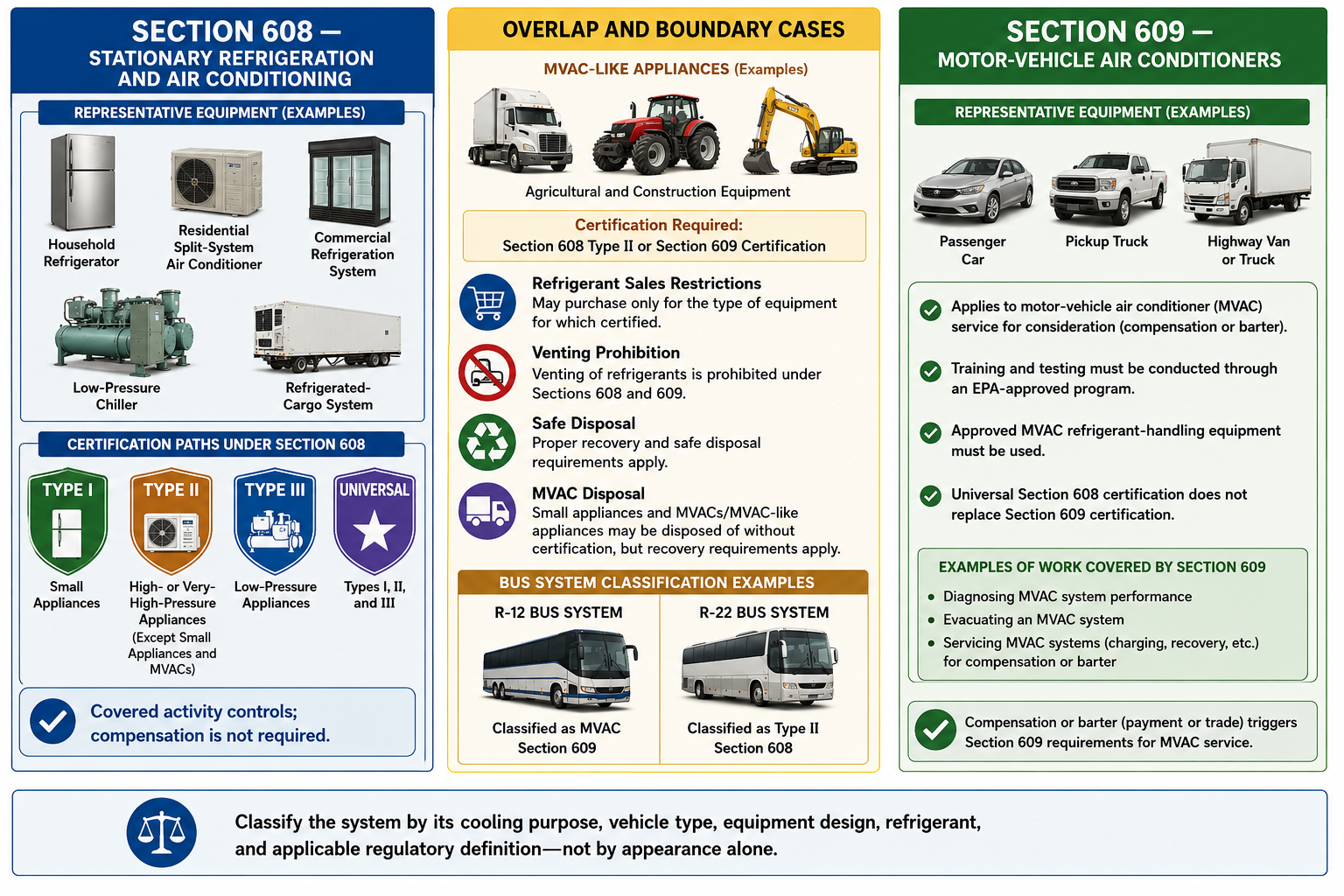
Figure 1.4.1 – Scope and overlap of Clean Air Act Sections 608 and 609.
AI-generated instructional figure: It may contain visual inaccuracies. Use the accompanying lesson text and cited authoritative sources to verify technical and regulatory details.
EPA 608 Exam Focus
What Students Must Remember
- Section 608 primarily covers stationary refrigeration and air conditioning.
- Section 609 specifically covers MVAC service for consideration.
- Section 608 regulations are in 40 CFR Part 82, Subpart F.
- Section 609 regulations are in 40 CFR Part 82, Subpart B.
- Universal Section 608 certification does not replace Section 609 certification.
- Section 608 training is voluntary; passing the approved test is required.
- Section 609 requires training and testing through an EPA-approved program.
- MVAC means equipment cooling the driver’s or passenger’s compartment of a motor vehicle.
- Refrigerated-cargo systems are not MVACs.
- MVAC-like appliances include qualifying open-drive systems on off-road equipment.
- MVAC-like appliance technicians may use Section 608 Type II or Section 609 certification.
- MVAC-like requirements apply regardless of compensation.
- EPA identifies an R-12 bus air-conditioning system as an MVAC.
- EPA identifies an R-22 bus air-conditioning system as Section 608 Type II equipment.
- Section 608’s venting prohibition also applies to MVAC systems.
- Disposal of MVACs is addressed through Section 608 safe-disposal requirements.
- Section 609 certification permits purchase of refrigerant acceptable for MVAC use.
- Section 609 certification alone does not authorize purchase of stationary-equipment refrigerant.
- An eligible small-can DIY sales exception does not authorize paid service or venting.
Typical Exam Question Patterns
Students may be asked to:
- Identify which section applies to a passenger-car air conditioner.
- Determine whether Universal certification is sufficient for paid automotive service.
- Identify the certification options for farm or construction equipment.
- Distinguish an MVAC from a refrigerated-cargo system.
- Classify an R-22 bus system.
- Identify the meaning of “for consideration.”
- Compare Section 608 and Section 609 training requirements.
- Determine which certification permits purchase of stationary refrigerant.
- Identify the effect of the small-can DIY exception.
- Explain which program controls MVAC disposal or venting.
High-Priority Comparison Table
| Exam Clue | Most Likely Answer |
|---|---|
| Stationary split system | Section 608 Type II |
| Household refrigerator service | Section 608 Type I |
| Low-pressure chiller | Section 608 Type III |
| Passenger-car A/C serviced for payment | Section 609 |
| Vehicle A/C serviced through barter | Section 609 |
| Off-road tractor cab A/C meeting MVAC-like definition | Section 608 Type II or Section 609 |
| Refrigerated cargo compartment | Section 608 |
| R-12 bus air conditioner | MVAC / Section 609 |
| R-22 bus air conditioner | Section 608 Type II |
| Universal technician performing paid MVAC service | Section 609 still required |
| Stationary refrigerant purchase using only Section 609 credential | Not authorized |
| MVAC disposal | Section 608 safe-disposal requirements |
Common Mistakes and Confusing Points
Mistake 1: Assuming Universal Means Every Refrigeration System
Universal covers the stationary-appliance categories under Types I, II, and III. It does not replace Section 609 for paid MVAC service.
Mistake 2: Assuming Every Vehicle-Mounted System Is an MVAC
A refrigerated-cargo system cools cargo and is excluded from the MVAC definition.
Mistake 3: Assuming Every Off-Road Cab System Requires Only Section 609
Qualifying MVAC-like equipment may be serviced under either Section 608 Type II or Section 609 certification.
Mistake 4: Ignoring the Open-Drive and Charge Conditions for MVAC-Like Equipment
The regulatory definition includes equipment-design and charge requirements. The name of the vehicle alone is insufficient.
Mistake 5: Assuming Payment Is Irrelevant to Section 609
Ordinary MVAC certification requirements apply to service or repair performed for consideration, including barter.
Mistake 6: Applying the Compensation Rule to Stationary Section 608 Work
Section 608 certification is based on covered activity, not on whether the technician is paid.
Mistake 7: Treating the DIY Small-Can Exception as Permission to Perform Commercial Service
The sales exception applies to qualifying small containers for DIY MVAC use. It does not provide Section 609 certification.
Mistake 8: Assuming Section 609 Permits Purchase of Stationary Refrigerants
Section 609 purchase authority is limited to refrigerants acceptable for MVAC use.
Mistake 9: Ignoring Refrigerant When Classifying Bus Systems
EPA’s R-12 and R-22 bus examples fall under different certification programs.
Mistake 10: Assuming Section 609 Replaces Section 608 Venting and Disposal Rules
Section 608’s venting prohibition and safe-disposal requirements remain relevant to MVAC systems.
Concept-Check Questions
Question 1
Which statement best describes the primary difference between Sections 608 and 609?
A. Section 608 applies only to refrigerant sales, while Section 609 applies only to safety
B. Section 608 primarily addresses stationary appliances, while Section 609 addresses MVAC service
C. Section 608 applies only to CFCs, while Section 609 applies only to HFCs
D. Section 608 is voluntary, while Section 609 has no certification requirement
Question 2
A Universal Section 608 technician repairs a passenger-car air conditioner for payment. What additional certification is required?
A. Type I
B. Type III
C. Section 609
D. No additional certification
Question 3
Which system is generally excluded from the MVAC definition?
A. Passenger-car cabin air conditioner
B. Pickup-truck passenger-compartment air conditioner
C. Refrigerated-truck cargo system
D. Highway-van passenger-compartment air conditioner
Question 4
Which certification pathway applies to a qualifying MVAC-like appliance on agricultural equipment?
A. Type I only
B. Type III only
C. Section 608 Type II or Section 609
D. Universal only
Question 5
What does “for consideration” mean in the Section 609 context?
A. Only payment made by credit card
B. Payment, barter, or another form of compensation
C. Any unpaid personal work
D. Work performed only at a vehicle dealership
Question 6
Which statement about Section 609 certification is correct?
A. Training is voluntary as long as the technician passes a Type II exam
B. An EPA-approved training program and a test are required
C. Universal Section 608 automatically includes Section 609
D. It applies only to vehicles using R-134a
Question 7
How does EPA classify the examination example of a bus air-conditioning system using R-22?
A. Type I small appliance
B. Type II Section 608 equipment
C. Type III low-pressure appliance
D. Section 609 MVAC in every case
Question 8
A person holds only Section 609 certification. Which purchase is not authorized by that credential alone?
A. Refrigerant acceptable for use in an MVAC
B. Refrigerant intended for a stationary R-22 air-conditioning system
C. An eligible small DIY MVAC can available without certification
D. MVAC refrigerant purchased within the certification scope
Question 9
Which statement about MVAC disposal is most accurate?
A. Section 609 permits the refrigerant to be vented during disposal
B. Section 608 safe-disposal requirements remain applicable
C. Universal certification is always required for the final disposer
D. No federal refrigerant requirements apply after the vehicle leaves service
Question 10
A technician services an MVAC-like system without receiving payment. Which statement is correct?
A. No certification is required because Section 609 applies only when payment is involved
B. The technician must still hold Section 608 Type II or Section 609 certification
C. Only Type I certification is required
D. The technician may vent the refrigerant because the work is unpaid
Answers and detailed explanations will be provided in
1.9 - Answers and Explanations.md.
Section Summary
Section 608 and Section 609 are related but distinct refrigerant-management programs.
- Section 608 primarily covers stationary refrigeration and air-conditioning appliances.
- Section 609 covers repair and service of MVAC systems for consideration.
- Universal Section 608 certification does not replace Section 609 certification.
- Section 608 training is voluntary, while the approved test is mandatory.
- Section 609 requires both approved training and testing.
- MVAC-like appliances may be serviced under Section 608 Type II or Section 609.
- Refrigerated-cargo systems are excluded from the MVAC definition and are generally handled under Section 608.
- Bus air-conditioning classification may depend on the refrigerant and regulatory definition.
- Section 608’s venting prohibition, refrigerant sales restriction, and safe-disposal requirements create important areas of overlap.
- Certification and refrigerant-purchase authority must match the covered equipment and intended use.
The next section explains the Section 608 examination structure and the requirements for earning Universal certification.
References
Current Regulatory Sources
-
U.S. Environmental Protection Agency, Section 608 and Section 609 Overlap, accessed August 5, 2026.
-
U.S. Environmental Protection Agency, Regulatory Requirements for MVAC System Servicing, accessed August 5, 2026.
-
U.S. Environmental Protection Agency, Section 609 Technician Training and Certification Programs, accessed August 5, 2026.
-
U.S. Environmental Protection Agency, Servicing Requirements for Farm and Heavy-Duty Equipment, accessed August 5, 2026.
-
U.S. Environmental Protection Agency, Refrigerant Sales Restriction, accessed August 5, 2026.
-
U.S. Environmental Protection Agency, Certified Equipment, accessed August 5, 2026.
-
U.S. Environmental Protection Agency, Definitions of Section 608 Terms, accessed August 5, 2026.
-
Electronic Code of Federal Regulations, 40 CFR Part 82, Subpart B — Servicing of Motor Vehicle Air Conditioners, accessed August 5, 2026.
-
Electronic Code of Federal Regulations, 40 CFR § 82.32 — Definitions, accessed August 5, 2026.
-
Electronic Code of Federal Regulations, 40 CFR § 82.40 — Technician Training and Certification, accessed August 5, 2026.
-
Electronic Code of Federal Regulations, 40 CFR Part 82, Subpart F — Recycling and Emissions Reduction, accessed August 5, 2026.
-
Electronic Code of Federal Regulations, 40 CFR § 82.152 — Definitions, accessed August 5, 2026.
-
Electronic Code of Federal Regulations, 40 CFR § 82.156 — Proper Evacuation of Refrigerant from Appliances, accessed August 5, 2026.